Reviewed by: Mom (does age matter?)
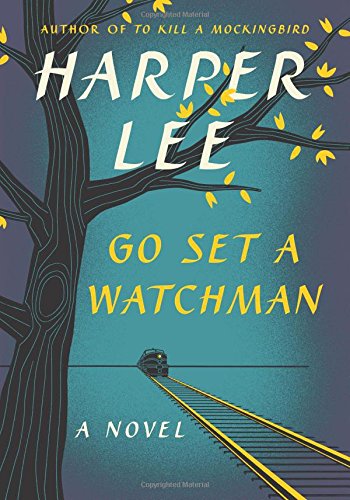
I struggled with the decision of whether or not to even read this book when the initial reviews were so negative. Like almost everyone else on the planet, I love
To Kill a Mockingbird and admire Atticus Finch as a man of integrity. In the end, I felt I just had to read it, and I am glad I did. The writing was beautiful and the themes complex. I felt raw and hurt with Scout when she witnessed what she thought was a betrayal by Atticus of all they held dear. I really loved the way Harper Lee demonstrated the complexity of the issue to those in the South-- although I can't say that I hold similar views to those expressed by the inhabitants of Maycomb, I did get a better understanding of how and why they held these views. And though it wasn't tied up as neatly in the end as I would like, with my beloved Atticus being beyond reproach, I think that was part of the point. There is also much to discuss here about the struggles of the South for a century and more after the Civil War; the way of life that existed under slavery and then after the Emancipation of the slaves posed so many challenges to African-Americans that made unification and de-segregation an easier-said-than-done situation. (I'm not excusing racism here, only viewing the complexities of a civilization seeking to overcome it). Those outside of the South found it much simpler and more clear-cut than those living in it. In truth, when solving society's problems, we often need the perspective of BOTH those outside of the situation and those in the midst of it to find a more useful and functional solution.
A major theme in the book was that no one is perfect; if we choose to idolize another human being, we will eventually be let down. Nelson Mandela said, "I'm no saint, unless you think a saint is a sinner who keeps on trying." We all are works in progress, and we all have need for mercy, even Atticus Finch. One of my take-aways was that after Scout was angry, after she felt betrayed and disillusioned and even hatred, she let herself try to understand another person's perspective. It seems that in our time there is much divisiveness, particularly between people of faith and secularists. Especially on social media, there are virtual lynch mobs, ad hominem attacks, righteous indignation, and so much vitriol spewed out upon those whom people do not understand. Our society instead needs more of listening to those with differing viewpoints and seeking to understand their perspective. This does not mean that we have to agree with everything they believe by any means. But as we seek to understand another, we see the good in them; we find the commonalities as well as the differences; instead of being sharply divided, we can agree to disagree and remember that their opinion on whatever subject is only a part of who they are-- and that is a work in progress. We all have need of mercy and grace extended to us, not only by the Savior, but by each other. If you are a believer (or seek to understand one,) you might appreciate
this talk given in a recent LDS General Conference. As I listened to it again this morning, it reminded me so much of this book.
I would love to hear your thoughts on the book in the comments. If you disagree with me, I would still love to hear them, and hope that you will be able to be civil and seek to understand my perspective. I think that Harper Lee would expect no less.
Genre: Fiction
Setting: post WWII Alabama
Introduction: Jean Lousie Finch (aka Scout) returns to Maycomb for a visit. She is in her mid-20s and living in NYC. She is disturbed by the changes she finds there, particularly when it comes to racial tension and attitudes. Her perspective on her father (and ours) is challenged and altered.
Themes: racism, family, states rights vs. Federal government, the South, forgiveness, seeking to understanding those who are different, idolizing a person will let you down, grace,
Recommended Age: 13 and up
Full Disclosure: There is some language. Frequent uses of the N word and several uses of the Lord's name in vain. The book deals with some big issues, so it is less about reading level and more about maturity to handle the issues discussed when determining a child's readiness to read this. Prepare to discuss the book with your child.
Rating: 4 stars
Other Books: To Kill a Mockingbird

